
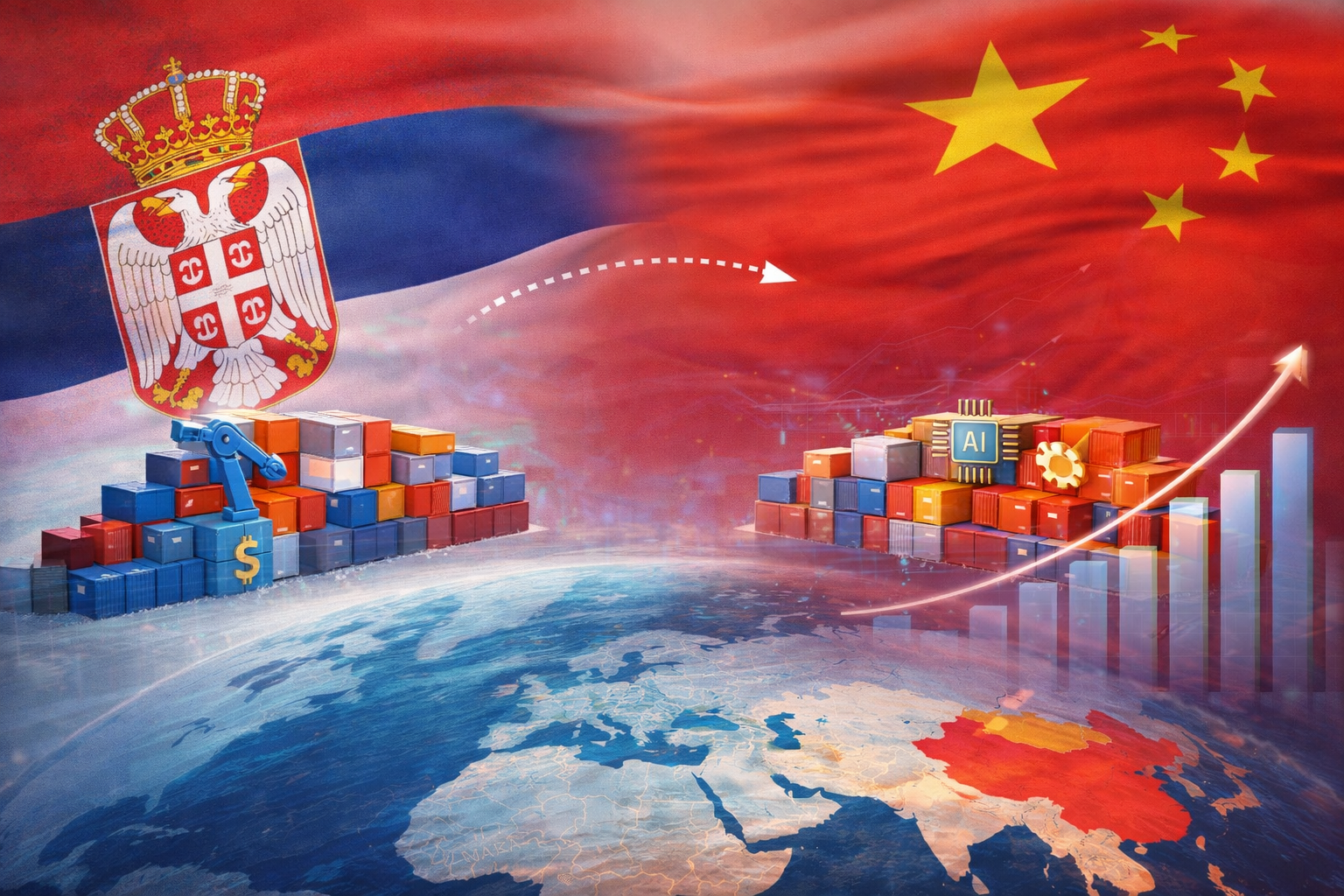

A new policy brief by Jelena Vasić examines the implications of the Free Trade Agreement (FTA) between Serbia and China, with a focus on trade in goods, competitiveness, and Serbia’s strategic positioning.
The analysis highlights that while the FTA opens new opportunities for economic cooperation, its short-term effects are likely to be more pronounced on the import side, reflecting the existing structural asymmetry in trade relations. Serbia continues to export primarily low value-added products, while imports from China are dominated by industrial and technologically advanced goods, contributing to a persistent trade deficit.
Realizing the benefits of the agreement will depend on stronger institutional support, export promotion, and the capacity of domestic firms to meet standards and compete in the Chinese market. The brief also emphasizes the importance of aligning trade policy with Serbia’s EU accession process.
This policy brief was developed within the China Policy Impact project, which builds on a previous initiative supported by the National Endowment for Democracy (NED). The project aims to strengthen the capacity of Western Balkan countries to respond to China’s growing presence by improving policymaking, enhancing civil society engagement, and promoting transparency and accountability.
Implemented over 24 months and coordinated by ESTIMA, the project brings together regional partners including AIIS (Albania), Transparency International BiH, CEMI (Montenegro), and Foundation BFPE (Serbia). Through a coordinated regional approach, the initiative contributes to strengthening institutional resilience and fostering a more informed and proactive policy environment across the Western Balkans.
Policy brief is available HERE.