

“Without culture, there is no democracy” was the slogan of the session “Can cultural policies do more to engage local communities?” on the second day of the World Forum for Democracy in Strasbourg. This slogan can be taken both as an introduction and as a conclusion to this year’s Forum.
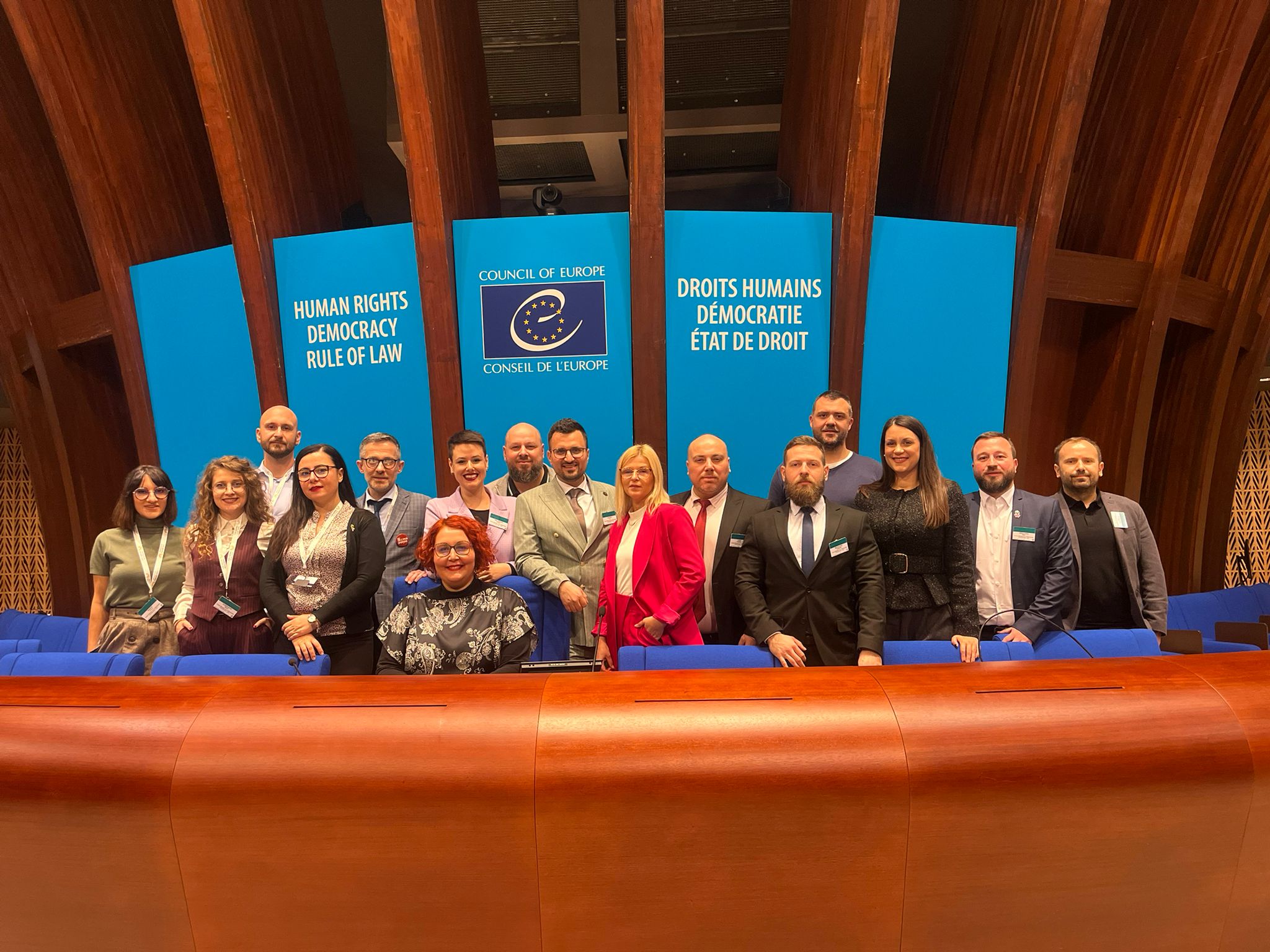
This November, Strasbourg once again became a center for reflection on the future of democracy. The World Forum for Democracy 2025, held from 5 to 7 November, brought together activists, researchers, political representatives, cultural workers, and members of civil society from around the world to discuss a crucial theme: Democracy at Risk: How Can We Revive It? Panels, workshops, and plenary sessions addressed issues such as the erosion of trust in institutions, the challenges of the digital age, citizen participation, media literacy, and the role of culture in shaping democratic life.
As part of the delegation of the Foundation BFPE for a Responsible Society, I took part in discussions on the links between local communities and democratic processes, particularly through the lens of cultural programs. I spoke about my doctoral research, about how citizens experience cultural events in their local environments, how included they feel, and what role cultural workers play in this process. Culture emerged at the Forum as an important field of action: it shapes collective memory, builds identity, and can open space for dialogue where political channels are narrow or closed.
On the second day of the Forum, we also visited the European Court of Human Rights. The delegation spent time in discussion with the Serbian judge, Prof. Dr. Mateja Đurović. The conversation raised questions about contemporary challenges in the field of human rights, the importance of international legal protection, and the interconnectedness of local initiatives and European institutions. This visit further reinforced the core message of the World Forum for Democracy—that democracy rests on respect for international standards, but also that Serbia has the human capacity for high-level international positions.
On the third day of the Forum, during the plenary session “Learning History to Strengthen Democracy,” I spoke about the gendering of cultural heritage and the symbolism of public space. I began my speech with an image familiar to many: in almost every Balkan city, a monument to a man on horseback stands in the city center, sword in hand, embedded in a narrative of conquest and domination. I contrasted this with the example of my hometown, Trstenik, where a monument has been erected to Princess Milica holding a book in her hand—a symbol of a different model of historical strength, perseverance, and political wisdom. I pointed out that the way we represent the past shapes how we understand the present and the future. Democracy is built not only through institutions, but also through the symbols we choose to highlight.
From the third day of the Forum onward, the Foundation BFPE delegation also had the opportunity to visit the European Parliament building. Touring this key European political space gave us insight into decision-making dynamics at the European Union level, as well as into how European issues translate into national policies. Being at the heart of European parliamentarism left a strong impression of how democratic processes develop through dialogue, negotiation, and institutional mechanisms, while also opening personal questions about Serbia’s long accession process to the European Union and reflections on the Republic of Serbia’s path toward joining this formal community of European nations.
The World Forum for Democracy 2025 offered a broad range of ideas, examples, and inspirations, while also reminding us of a shared responsibility: democracy is preserved through daily work, openness to dialogue, and the cultivation of a critical yet constructive public sphere. Within this space, culture plays a far greater role than is usually assumed—it reshapes narratives, raises questions, gives voice to communities, and builds a society willing to constantly reflect on itself and change.
Author: Jelena Vukčević, Alumna of Annual Seminar