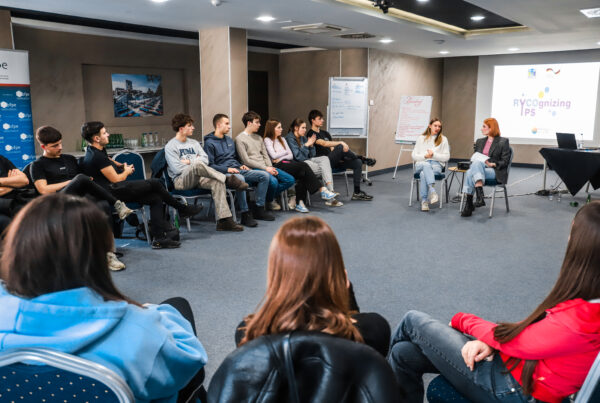

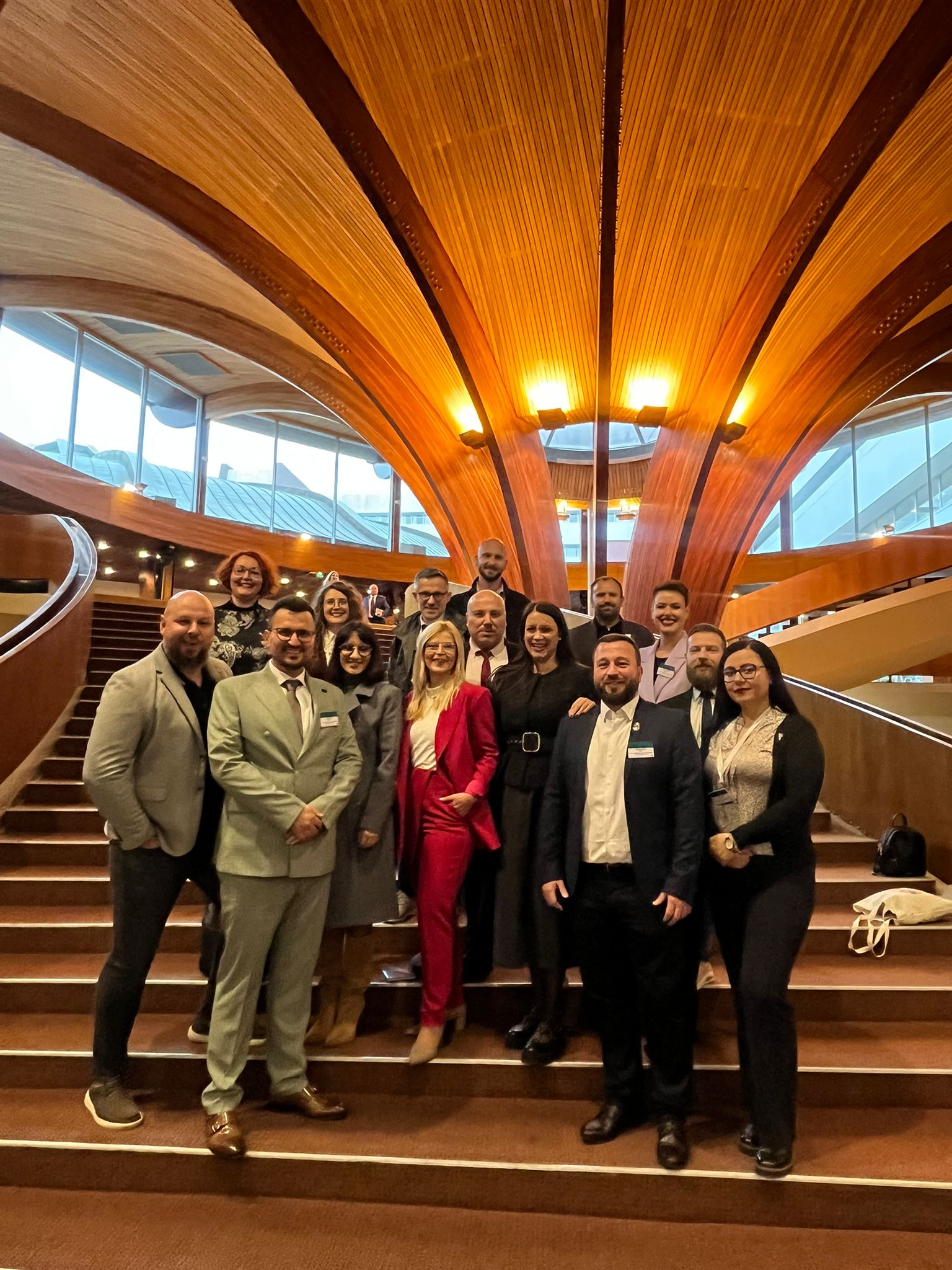

As a participant in the Annual Seminar—an interdisciplinary program that is part of the Council of Europe’s School of Political Studies and implemented in Serbia by the Foundation BFPE for a Responsible Society—I was given the opportunity to expand my non-formal education, build new connections, and take part in this year’s World Forum for Democracy.
The World Forum for Democracy is an event organized by the Council of Europe since 2012 and represents a unique opportunity for all of us—participants and representatives of different sectors, from the media and business sectors to civil society organizations and academia—to gain deeper insight into current political developments at the global level and to learn about the overall state of democracy worldwide and the challenges it faces.
Freedom of Expression and the Media
The overarching theme of this year’s Forum was Democracy at Risk: How Can We Revive It? Since this year’s Forum coincided with the marking of the 75th anniversary of the adoption of the European Convention on Human Rights, in addition to discussions on current risks to democracy, questions were raised about how the current state of democracy affects human rights and about the role of international institutions in this process. The risks facing democracy today were presented from multiple perspectives. I would first highlight the right to freedom of expression as one of the fundamental human rights. This right is enshrined in Article 10 of the Convention, and the importance of freedom of expression for democracy was emphasized by one of the panelists, Quinn McKew, Executive Director of Article 19, who noted that in autocratic states freedom of expression is among the first rights to come under attack, and that control of information is one of the primary ways autocracies strengthen and consolidate power.
Closely linked to freedom of expression and one of the pillars of democracy is journalism, which is why journalism and the position of the media were unavoidable topics at the Forum. Media were discussed in the context of their transformation due to the development of information and communication technologies, as well as the positive and negative effects of this transformation on democracy. The debate on media included important issues such as censorship, the use of artificial intelligence, the rise of fake news, as well as the importance of new media—especially when it comes to the visibility of marginalized voices and groups—and the crucial role of media literacy in a time when we are inundated with information from both traditional and new digital media.
Forms of Citizen Participation in Political Processes: A Response to the Crisis of Democracy
In addition to the topics mentioned above, the issue of the role of citizen participation particularly captured my attention. At a time when democracy is experiencing a kind of crisis and facing numerous risks, people express their demands for democracy and for the renewal of values that form its core through various forms of civic participation, including activism and protests. One of the reasons this topic resonated with me is the forms of citizen participation we have witnessed in Serbia over the past year. In Serbia, demands for a more democratic society have been expressed for more than a year through a rise in civic activism and protests. These protests were initiated by young people—students and high school pupils. In their struggle, these young people have managed to gain broad public support, with daily backing from citizens, activists, representatives of civil society, academia, and media professionals. Many of them, unfortunately, face significant pressure, various forms of violence, and a lack of institutional protection. Nevertheless, all these challenges have not proven to be obstacles, nor have they discouraged them in their fight for a more just society and for democracy.
Author: Jovana Rančić, Alumna of Annual Seminar